Did you know that many robots working today are less like the super-smart machines in movies and more like powerful, fast arms? It’s true! But things are changing fast. These machines, along with sophisticated computer programs, are increasingly taking on tasks that we used to perform. It makes you wonder, “What will work look like in a few years?”
The world of work is undergoing rapid change, thanks to the advancements in robotics and automation. These technologies are making significant changes in how we work. They bring together intelligent machines, Robotics and Automation to change jobs and skills needed.
We’re seeing an increase in industrial robots and smart factories. Also, robotic process automation and working with machines are becoming common. This mix of tech and work is making things more complex.
Key Takeaways
- Robotics and automation are reshaping the future of work, redefining job requirements and skills needed.
- The rise of intelligent machines, AI, and advanced automation technologies is transforming industries and workplaces.
- Robotic process automation is driving efficiency and productivity in various sectors.
- Human-machine collaboration is becoming essential for navigating the changing workforce landscape.
- Upskilling and reskilling the workforce is crucial for adapting to the evolving demands of the job market.
We hear a lot about Robotics and Automation: The Future of Work. It sounds a bit scary, like robots might take over everything! But is that really what’s happening?
This article examines how technology is transforming the workplace. We’ll see how it’s changing jobs, skills, and the future of work. We’ll discuss the benefits and drawbacks of automation and robotics. And we’ll discover what skills people need to excel in this new world.
What is the future of robotics and automation?
Imagine a kitchen where a robot arm helps you chop veggies while you decide on the spices. That’s a peek into the future! It’s not about robots taking over, but about them helping us out.
- Friendly Helpers (Cobots): We’ll see more robots called “cobots.” These aren’t huge, scary machines behind fences. They’re built to work with people. Perhaps a cobot lifts a heavy box while a person checks its contents. They’ll do the boring or complicated stuff, so we don’t have to.
- Automation for Everyone: It used to be that only giant companies could afford robots. Not anymore! Now, even small shops can use them. Consider a local bakery utilizing a small robot to mix dough, thereby freeing up the baker to invent new cakes. It’s becoming easier and cheaper.
- Smart Robots (AI Inside): The real game-changer is Artificial Intelligence (AI). This is like giving robots a brain. Instead of just following orders, they can learn and make simple choices. A robot in a big warehouse might figure out the fastest way to get your order, or a robot on a farm might know exactly when a tomato is perfectly ripe.
The future is a team-up: our smart ideas and a robot’s hard work, working together like best buddies.
✔️Related Post: How AI Tools Magic Your Productivity and Efficiency? Let’s Magic
What is the role of robotics in the future of work?
Think of robots as the best assistants you could ever ask for. Their main job will be to handle the tasks that are, well, a bit boring or tiring for us.
We all have parts of our jobs that we wish we didn’t have to do, right? Like filling out the same forms over and over, or sorting through hundreds of emails. Robots are perfect for these kinds of jobs. They can do them quickly and without making mistakes, which is a huge plus!
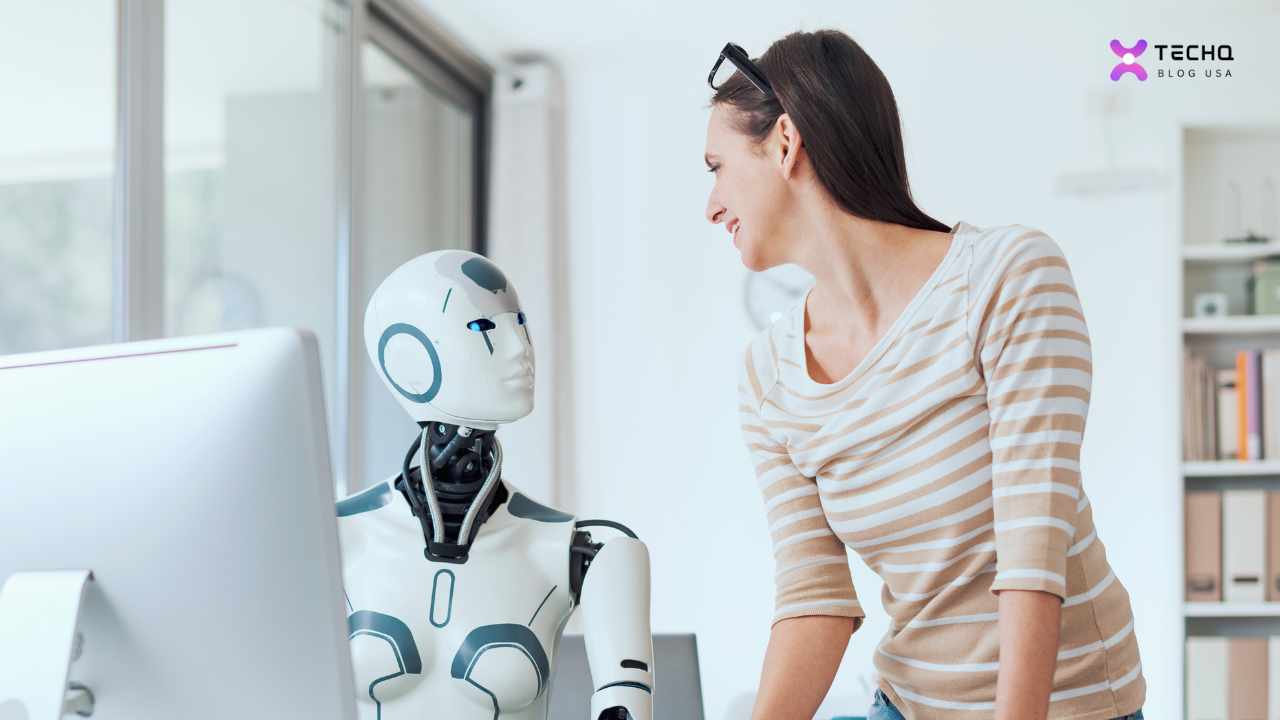
However, it’s not just about removing the dull aspects. Robots will also help us work together better. Imagine having a meeting where an intelligent robot takes notes for everyone, finds information when you ask for it, and even helps schedule the next meeting. How cool is that?
When robots handle these tasks, it leaves us humans free to do what we do best:
- Thinking Big: Coming up with new plans and ideas for the future.
- Being Creative: Inventing new things and solving tricky problems.
- Connecting with People: Talking, listening, and leading teams. We have feelings and understanding; robots don’t.
So, the role of robots is to be our partners. We’ll use our hearts and minds, and they’ll use their speed and strength. It’s a win-win!
What is the future of robotic process automation?
Let’s discuss Robotic Process Automation (RPA). This may sound elaborate, but it’s pretty simple. Imagine you have a tiny robot living inside your computer. This little robot can watch what you do – like clicking, typing, opening files – and then do it all for you.
RPA isn’t a physical robot; it’s software. It’s ideal for office jobs where individuals spend a significant amount of time on computer tasks. What does the future hold for these “software bots”?
- Getting Smarter: Currently, most RPA bots primarily follow rules. However, with AI integrated, they’ll soon be able to learn and make decisions. They won’t just copy you; they’ll understand why you do things and find better ways.
- Living in the Cloud: More RPA will be hosted in the cloud. This means you won’t need big, expensive computers at your office to run it. It makes it easier for any business, big or small, to start using it.
- Easy to Use: You won’t need to be a computer genius to use RPA. New tools enable you to build your bots by simply dragging and dropping elements on the screen. Anyone can become an “automation creator”!
- Super Automation (Hyperautomation): This is the big goal. It means utilizing RPA in conjunction with AI and other tools to automate entire business processes, not just individual tasks. It’s like having a whole team of robots working behind the scenes.
Experts believe businesses will soon spend billions on RPA. Why? Because it saves time, cuts costs, and lets people focus on more important work.
What are 5 interesting facts about robots?
Robots are pretty neat! Here are some fun facts that show how far they’ve come and where they might go:
- “Robot” Means “Slave Work”: The word first appeared in a play from 1920. It originated from the Czech word “robota,” meaning hard or forced labor. Kind of fitting, right?
- The First Robot Worker: A robot arm named “Unimate” started working in a car factory way back in 1961. Its job was to pick up and move hot pieces of metal – a tough job for a person!
- Robots That Can Feel: Scientists are developing robot “skin” that can sense touch, even something as light as a feather landing on it. This will enable robots to handle delicate items and work more safely around us.
- A Robot Wrote a Book (Sort of): An AI program helped write a short story in Japan, and it was so successful that it advanced to the next stage of a writing contest.
- Robots Are Healing Our Oceans: Special underwater robots are helping to plant new coral and repair damaged reefs. Robots aren’t just for factories; they can also help our planet.
Is robotics and automation a good career?
Yes, it’s a great time to get into this field! As we increasingly utilize robots and intelligent programs, we require more individuals who are skilled in working with them. It’s similar to when cars first emerged – we needed people to build, repair, and drive them.
Jobs in robotics and automation are growing at a rate significantly faster than the average. People who can:
- Design and build robots.
- Write the programs that tell robots what to do.
- Fix robots when they break.
- Figure out the best ways for businesses to use automation.
But you don’t have to be a tech whiz. We’ll also need people who can consider the rules for robots (so they’re used in beneficial ways), design how we interact with robots (so they’re easy to use), and teach others how to work in this new world.
If you like solving problems, learning new things, and being part of the future, a career in this area could be perfect for you.
What are three advantages of robots?
Why are we even bothering with all these robots? Because they bring some huge pluses to the table:
- They Work Harder & Faster: Let’s be honest, robots have some serious stamina. They don’t need coffee breaks, lunch breaks, or vacations. They can perform a job repeatedly, 24 hours a day, 7 days a week, without getting tired or bored. This means companies can make more things, faster.
- They Keep Us Safe: Some jobs are just plain dangerous for people. Consider working at a high elevation on a building, deep underground in a mine, or with hazardous chemicals. Robots can go where we can’t (or shouldn’t) go. They can handle the risky tasks, so we don’t have to get hurt.
- They’re Super Accurate: When a person performs the same task hundreds of times, they may occasionally make a minor mistake. It’s only human! But robots can do the same thing, in the same way, every single time. This is ideal for creating products that require precision, such as computer chips or pharmaceuticals.
Will AI replace robotic engineers?
That’s a great question, and it’s one many people worry about. Will the “smart” machines become so advanced that they can build and repair themselves, rendering engineers obsolete?
Probably not. Think about it this way: Did powerful calculators make math teachers disappear? No! They just gave them a new tool to teach even more interesting things.
AI will be a super-tool for robotic engineers. It will help them:
- Dream up better robots: AI can run tests and simulations much faster than humans, assisting engineers in finding the best designs.
- Teach robots new tricks: Instead of writing every single line of code, engineers can use AI to help robots learn tasks, almost like teaching a pet.
- Know when a robot needs help: AI can monitor robots and predict when a part might break before it happens, allowing engineers to fix it before it fails.
So, AI won’t replace engineers, but it will change their jobs. Engineers will need to learn how to use these new AI tools. Their job will shift from focusing on basic tasks to emphasizing big ideas, creative problem-solving, and ensuring that AI and robots work together effectively.
Why is automation the future?
Automation isn’t just a cool new toy; it’s becoming a must-have. It’s the future because:
- We Need to Be Faster: Everyone wants things now! Businesses must be quick and efficient to keep customers satisfied and stay ahead of their competitors. Automation helps them speed things up.
- Technology is Ready: The tools – AI, fast computers, smart sensors – are better and cheaper than ever. It’s like all the pieces of the puzzle are finally coming together.
- We Have So Much Information: We generate a vast amount of data every day (every time you click, buy, or post!). Humans can’t possibly look at all of it. We need automation to help us understand it and use it.
- Jobs are Changing: As automation takes over some tasks, it allows people to move into jobs that require human skills, such as creativity, compassion, and making significant decisions.
- We Have Big Problems to Solve: Think about finding cures for diseases, exploring space, or protecting our planet. Automation gives us powerful new ways to tackle these enormous challenges.
The future isn’t about less work; it’s about different work. It’s about letting machines handle the mechanical tasks so that humans can focus on the human aspects.
How Robots are Changing Different Jobs (A Simple Look)
Conclusion: Don’t Fear the Future, Build It!
The world of Robotics and Automation: the future of Work is here, and it’s growing every day. It might seem a little strange or even scary, but it’s full of exciting possibilities. We can work more safely, accomplish more, and perhaps even address some of the most significant global issues.
Yes, jobs will change. Some tasks we do today might be done by robots tomorrow. But that doesn’t mean we won’t have jobs. It means we need to be ready to learn new things and focus on our human strengths – our minds and our hearts.
The best part? We get to decide how this future looks. We can choose to build robots and use automation in ways that help everyone. We can ensure that people receive the necessary training for new jobs.
So, instead of worrying, let’s get curious. Let’s learn. Let’s explore how we can utilize these fantastic new tools to enhance work and life further.
What’s one thing you can learn this week to get ready for this new world of work?
You May Like To Read:
- The Rise of AI: Transforming Every Industry
- Metaverse Mania: The Future of Virtual Reality
- Cloud Computing Technology: Revolutionizing Modern Business
- DevOps vs Agile: Optimize Your Workflow
- Top 10 AI Tools to Skyrocket Your Creativity
- DIY Smart Home Setup: Automate Your World
- AI vs Human: Who Will Be the Boss of Jobs in the Future?
- The Future of Transportation: Innovative Revolution