Can you believe that soon, almost everything around us will be connected to the internet? Imagine billions of tiny eyes and ears, all talking to each other! A significant aspect of this exciting change is the Industrial Internet of Things (IIoT). If you work in an industry that manufactures, moves, or powers our world, IIoT is like a superpower waiting to be unleashed. It’s here to help you Optimize (make things run smoother), Innovate (come up with new ideas), and Conquer (be the best in your field).
The Industrial Internet of Things (IIoT) is changing how we produce and move goods. It uses smart technology to improve efficiency and speed. This helps us predict problems, speed up supply chains, and enter a new phase in manufacturing.
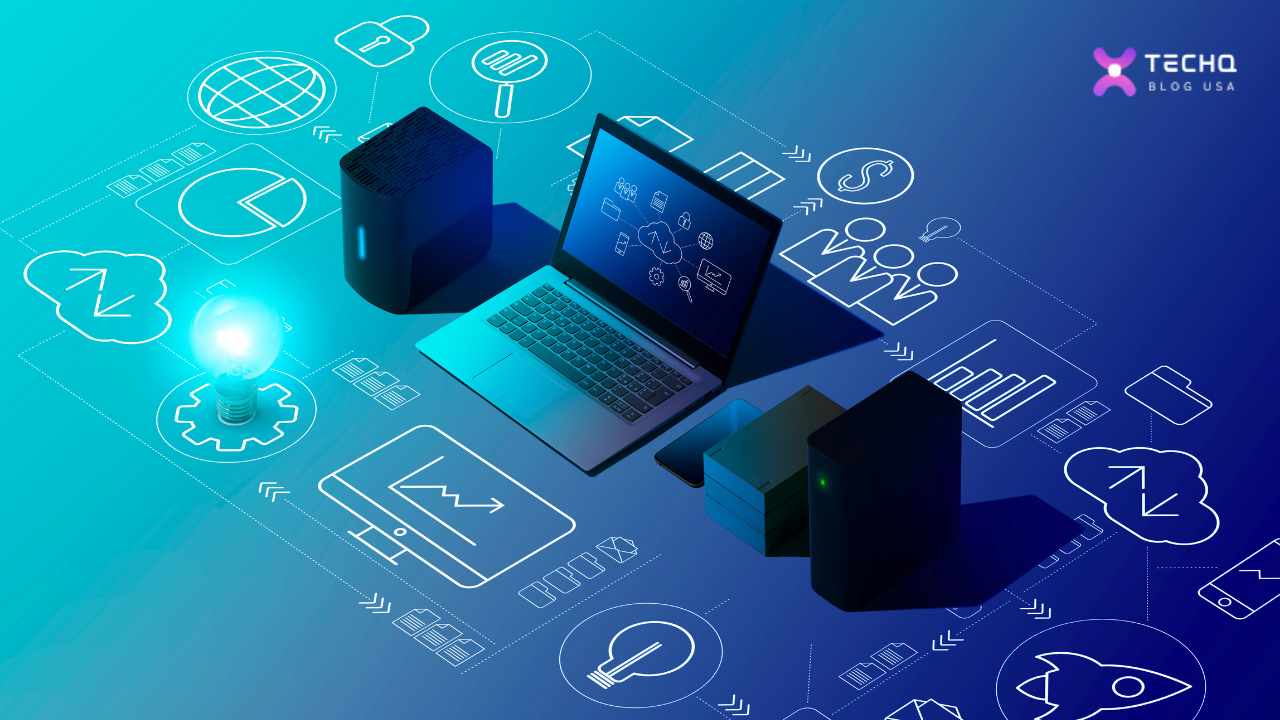
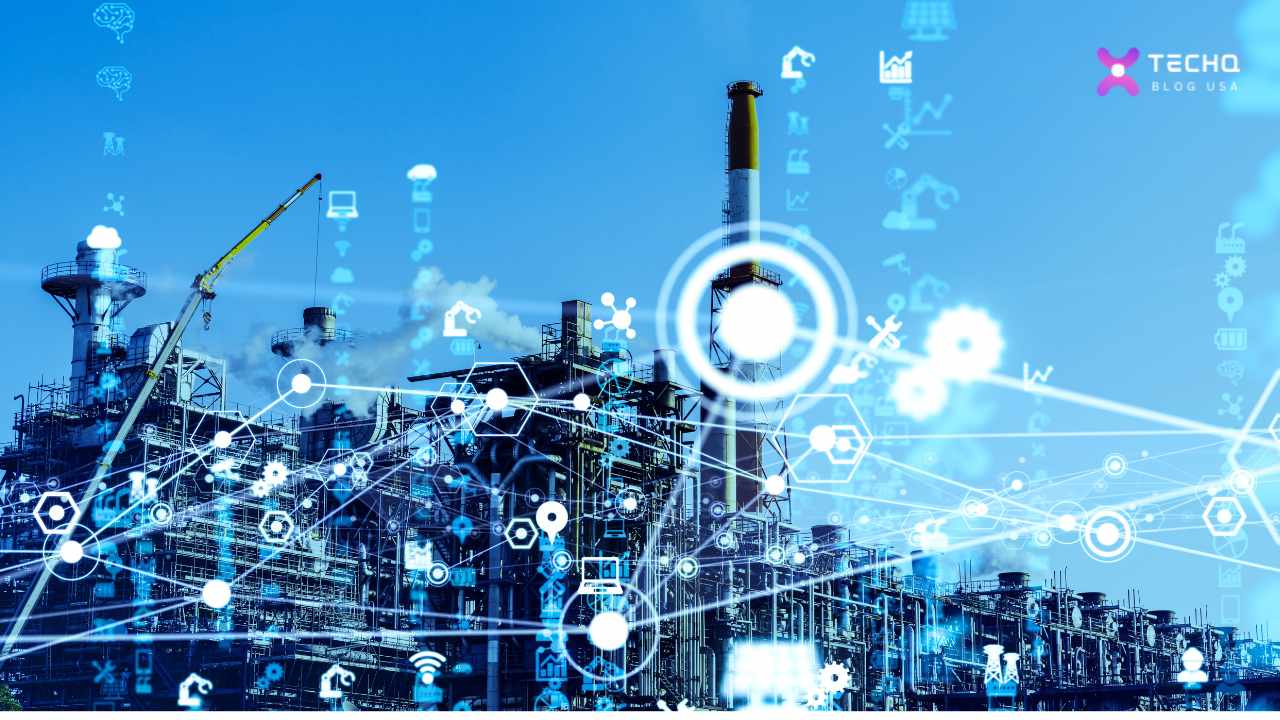
At its core, the Industrial IoT (IIoT) involves connecting machines, devices, and sensors within industrial environments to the Internet. This interconnectedness enables the collection and exchange of vast amounts of data, which can then be analyzed to gain valuable insights, optimize processes, and make informed decisions in real-time.
Ready to see how this ‘smart’ world can change your job and your industry? Let’s jump in and explore!
Key Takeaways
- The Industrial Internet of Things (IIoT) revolutionizes manufacturing and supply chains by leveraging innovative technology and real-time data.
- It enhances efficiency by improving manufacturing, predicting maintenance needs, and effectively managing assets.
- Supply chains become more adept at identifying and responding quickly, enabling us to meet market needs.
- Keeping the connected factories safe is very important.
- We’re moving towards Industry 4.0 with smart manufacturing and IIoT solutions.
What Do You Mean by Industrial Internet of Things?
Think about a busy factory or a giant power plant. Now, picture all the important machines in that place having a way to communicate with us and with each other. That’s the basic idea of the Industrial Internet of Things, or IIoT.
It’s like giving your machines a voice and a brain. We put special little gadgets called sensors on them. These sensors can feel things like heat, movement, or pressure, just like our senses! Then, these machines use the internet to send this information, or data, to computers.
These computers can look at all the data and understand what’s happening. Sometimes, they can even tell the machines what to do next, all by themselves! It’s like having a super-smart helper watching over everything, ensuring everything runs perfectly.
✔️Related Post: 10 Affordable Cloud Hosting in USA: Best Value Cloud
What are Examples of Industrial IoT Solutions?
IIoT isn’t just a cool idea; it’s already helping companies do amazing things! Here are some ways it’s being used right now:
- Fixing Things Before They Break (Predictive Maintenance): Wouldn’t it be great to know your car needed a fix before it broke down on the highway? IIoT does that for factory machines! Sensors listen to how machines are running. If they hear a tiny rattle that could develop into a significant problem, they report it to someone. This means fewer surprise shutdowns and more time making things. One large company saved a significant amount of money – almost one-third of their repair costs – simply by using this.
- Smarter Power Grids: The lights in your house get power from a vast network called a grid. IIoT makes this grid smarter. Sensors can find problems, like a fallen power line, right away. They can even send power around the problem spot, so fewer people lose electricity. It helps keep our lights on and uses energy wisely.
- Knowing Where Your Stuff Is (Connected Logistics): Have you ever ordered something online and tracked its journey? IIoT does that for big companies, but it does it way better! Special trackers on trucks, ships, and boxes show exactly where things are. They can even check if something needs to stay cold, such as ice cream. This helps ensure that everything is delivered safely and on time.
- High-Tech Farming (Precision Agriculture): Even farms are getting smarter! Farmers use IIoT sensors in their fields. These sensors check the soil to see if plants need water or food. They can even watch the weather. This helps farmers produce more food while using less water and fertilizer, which benefits everyone.
What are the 4 Types of IoT?
IIoT is a big deal, but it’s part of an even bigger family called the Internet of Things (IoT). Think of it like this:
- Things for You and Me (Consumer IoT): These are the smart gadgets we use every day. Think of smartwatches that track our steps, smart speakers that play music when we ask, or bright lights we can turn off with our phones.
- Things for Businesses (Commercial IoT): These devices are commonly used in places such as stores and offices. Perhaps it’s a smart building that adjusts the heat to conserve energy, or sensors in a store that help retailers understand what shoppers prefer.
- Things for Factories and Big Jobs (Industrial IoT – IIoT): This is our main topic! It’s all about leveraging innovative technology in large industries to make them safer and more efficient.
- Things for Our Towns and Cities (Infrastructure IoT): This helps run our cities. Consider bright traffic lights that adjust based on the number of cars present, or systems that help maintain clean water.
What is the Difference Between IoT and IIoT?
So, what makes IIoT different from the smartwatch on your wrist? It’s all about its importance and its applications.
Imagine your smartwatch stops working for a bit. It’s annoying, right? But it’s probably not a disaster. Now, think about a sensor that controls a giant, powerful machine in a factory. If that stops working correctly, it could be extremely hazardous or result in a substantial financial loss.
IIoT systems must be robust because they often operate in harsh environments with high temperatures, dust, or vibration. They need to be super reliable because a mistake can cause big problems. They need to be highly secure to protect them from malicious actors, such as hackers, who might attempt to compromise them.
Here’s a simple way to see the difference:
What is the Principle of IIoT?
The main idea, or principle, behind IIoT is simple: Listen, Understand, and Act. It works like a circle:
- Listen (Sense): The sensors are the ‘ears’. They listen to the machines and the world around them, gathering a wide range of information.
- Talk (Communicate): This information gets sent over the internet or special networks, like messages being passed along.
- Understand (Analyze): Smart computers look at all these messages. They search for clues, find patterns, and figure out what it all means. It’s like solving a puzzle.
- Act: Based on what they understand, the computers can either instruct a machine to perform an action (such as “slow down” or “turn off”) or notify a person, “Hey, you should check this out!”
This circle helps businesses stop reacting to problems after they occur and start predicting or preventing them before they happen.
What are the Four Pillars of Industrial IoT?
To build a strong IIoT system, you need four important building blocks, or pillars. Think of it like building a house, you need all four walls to make it stand strong.
- The Connections (Connectivity): This is how everything talks to each other. It’s the internet, Wi-Fi, and other methods that enable machines and computers to send messages back and forth quickly and securely.
- The Senses and Hands (Sensing & Actuation): These are the sensors that sense the world and the actuators that act upon it. If a sensor indicates that it’s too hot, an actuator may activate a fan.
- The Brains (Data & Analytics): This is where all the information goes to be understood. It uses smart computer programs, sometimes even Artificial Intelligence (AI) – which is like making computers think – to find important answers in the data.
- The People and Plans (People & Processes): You can have the best tools, but you still need skilled individuals who know how to utilize them effectively. This pillar is about having the right people and the right plans to utilize IIoT in the most effective way.
What is the Future of Industrial Internet of Things?
The Industrial Internet of Things (IIoT) is already changing the world, but it’s just getting started! What does the future hold? Get ready for even more amazing things:
- Thinking on the Spot (Edge Computing): Instead of sending all information far away to big computers, some decisions will be made right where the action is – at the ‘edge’. This is faster and helps things react instantly. Imagine a robot quickly dodging something in its path – that’s edge computing!
- Smarter and Smarter Computers (AI & ML): Computers will continue to improve at learning and making decisions. They won’t just tell us if something will break, but why, and how to make it last longer. They might even run whole parts of a factory by themselves!
- Super-Fast Internet (5G and Beyond): You know how 5G makes your phone faster? It will also help thousands of IIoT devices communicate with each other almost instantly, allowing everything to work together more smoothly.
- Digital Copies (Digital Twins): What if you could build a perfect copy of your factory inside a computer? That’s a digital twin! You could try out new ideas or test changes on the computer copy first. If it works, you do it in the real factory. If not, no harm done! It’s like having a practice run for everything.
- Stronger Shields (Enhanced Security): As more things become connected, keeping them safe becomes increasingly essential. We’ll see stronger ways to protect IIoT systems from malicious actors, such as building digital walls and having guards constantly monitoring the system.
Listen to an Expert: “IIoT is like giving our industries a new set of eyes, ears, and a super-fast brain. It lets us see things we never saw before and do things we never thought possible.” – A leading tech thinker.
Conclusion: Your Turn to Build the Future!
The Industrial Internet of Things may sound like something from a movie, but it’s a real phenomenon that’s happening now. It’s changing how we make things, how we get power, and how we move goods around the world. For anyone working in these areas, IIoT isn’t just something to know about – it’s something to get excited about!
It offers a chance to make your work safer, your company stronger, and your industry better. It’s a chance to Optimize, Innovate, and Conquer.
So, the big question is: Are you ready to be part of this amazing change? How do you think the Industrial Internet of Things (IIoT) could benefit your workplace? Let us know your thoughts!
You May Like To Read:
- The Rise of AI: Transforming Every Industry
- Metaverse Mania: The Future of Virtual Reality
- Cloud Computing Technology: Revolutionizing Modern Business
- DevOps vs Agile: Optimize Your Workflow
- Top 10 AI Tools to Skyrocket Your Creativity
- DIY Smart Home Setup: Automate Your World
- AI vs Human: Who Will Be the Boss of Jobs in the Future?
- The Future of Transportation: Innovative Revolution